Yoga Poses: Basic, Beginner, Classical & Traditional
You’ve probably seen a yoga class and thought, “I could never do that.” The reality is simpler: yoga poses are more accessible than they look, and the numbers attached to different traditions map to distinct frameworks, not a single hierarchy.
Number of basic poses in classical Hatha yoga: 12 ·
Poses in the Bikram yoga sequence: 26 ·
Number of poses commonly cited in traditional texts: 84 ·
Poses recommended for beginner fitness in top SERP sources: 10
Quick snapshot
- 12 basic postures from Sivananda Hatha tradition (Sivananda Yoga Vedanta Centre)
- 26 Bikram poses in a fixed series (Bikram Yoga official site)
- 84 classic asanas from traditional texts (Yoga Journal)
- The exact origin of “84 classic yoga poses” is not pinned to a single author.
- Whether the 7 basic poses are a distinct tradition or a modern simplification.
- No timeline signal applicable — these pose sets are static frameworks, not evolving chronologies.
- Start with a beginner-friendly 10-pose sequence drawn from editorial sources (Verywell Fit).
Five number sets, one pattern: each framework serves a different purpose — from classical completeness to beginner accessibility.
| Label | Value |
|---|---|
| Number of basic yoga postures | 12 (Hatha) |
| Number of poses in Bikram yoga | 26 |
| Number of classical asanas often cited | 84 |
| Common beginner sequence size | 10 |
| Simplified beginner sequence size | 7 |
What are the 12 basic yoga postures?
List of the 12 basic Hatha yoga postures
The 12 basic postures, rooted in the Sivananda tradition, are designed to stretch and strengthen the entire body in a logical order. The sequence includes: headstand, shoulderstand, plow, fish, sitting forward bend, cobra, locust, bow, spinal twist, crane/firefly, standing forward bend, and triangle (Sivananda Yoga Vedanta Centre). Each posture prepares the body for the next, creating a balanced practice.
How the 12 postures form a balanced practice
These 12 asanas are grouped into three phases: inversions (headstand, shoulderstand, plow), forward bends (sitting forward bend, standing forward bend), and backbends (cobra, locust, bow, fish). The spinal twist and crane/firefly add lateral and balancing work, while triangle engages the legs and hips. This structure ensures that every major joint and muscle group is activated (Yoga Journal, editorial authority on yoga practice).
The 12-posture sequence is not a random list — it’s a deliberate progression from inversion to forward bend to backbend, mirroring the classical Hatha approach to energy flow.
The implication: for anyone seeking a complete Hatha practice, these 12 postures deliver a full-body workout without needing to memorize dozens of variations.
What are the 10 poses of yoga?
Top 10 yoga poses for beginners
Editorial sources consistently recommend 10 poses as the ideal starting point. According to Verywell Fit, a trusted health and fitness resource, the beginner lineup includes: downward dog, child’s pose, cat-cow, mountain pose, warrior I, warrior II, tree pose, bridge pose, corpse pose, and seated forward fold. Yoga Journal adds that this sequence typically begins with breath awareness, moves through standing postures, and ends with relaxation.
How to perform the 10 beginner poses safely
- Start with breath awareness: 5 slow breaths before any movement (Yoga With Adriene, beginner-oriented platform).
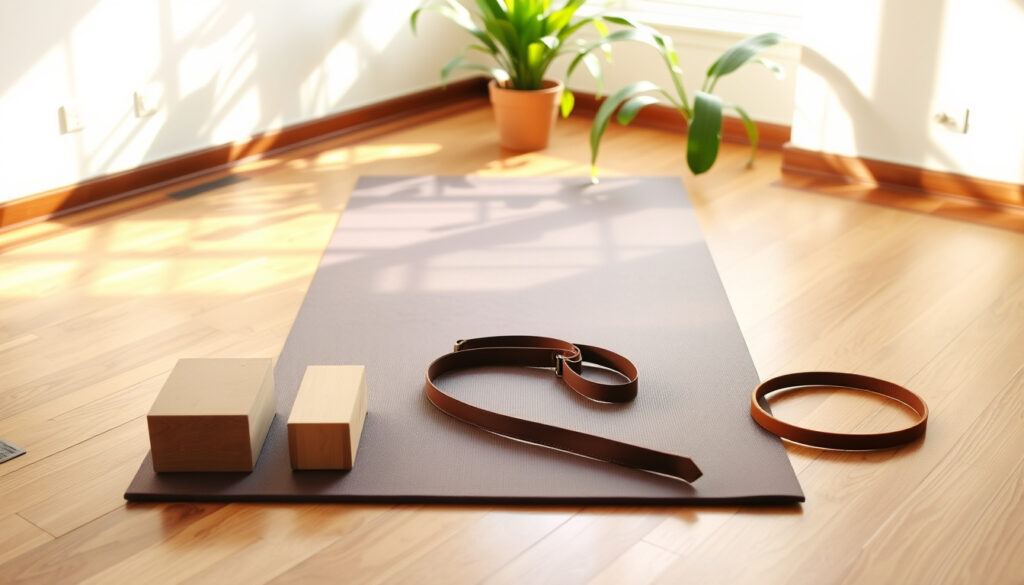
- Use props (blocks, straps) in child’s pose and seated forward fold to avoid strain (Center for Yoga LA, studio with teaching expertise).
- Keep knees slightly bent in mountain pose if you have tight hamstrings.
- Move through the sequence slowly, holding each pose for 3–5 breaths.
Beginners who skip the warm-up (cat-cow, child’s pose) often injure their lower back. The 10-pose sequence is designed to progress from gentle to moderate and back to gentle — a safe curve.
The trade-off: these 10 poses are a subset of the 12 Hatha postures, so they’re easier to learn but less comprehensive. For a short home practice, they work well.
What are the 84 yoga poses?
Meaning behind the 84 asanas in classical yoga
In traditional yoga texts, 84 is a symbolic number representing completeness — a full set of asanas for the body and mind. Yoga Journal notes that the 84 classic poses include many variations of the postures found in the Hatha Yoga Pradipika, which lists 15 original asanas (GHOSH YOGA, Hatha yoga scholarship). The number 84 is not meant to be memorized sequentially but rather represents a mature practice.
How 84 poses relate to other sequences (12, 26)
The 84 asanas are not a strict sequence like the 12 Hatha or 26 Bikram sets. They are a reference library from which teachers can draw. The 12 basic poses are a subset of these 84, focusing on foundational forms. The 26 Bikram poses, by contrast, are a separate fixed series developed by Bikram Choudhury and do not overlap significantly with the 84 (Bikram Yoga official site).
The catch: the 84 asanas are often cited in wellness blogs without a canonical source, making their exact list vary by teacher.
What are the 26 traditional yoga poses?
List of 26 Bikram yoga poses
The 26 poses of Bikram yoga are a fixed sequence performed in the same order every class. According to Bikram Yoga’s official site, the series includes: standing deep breathing, half moon pose, awkward pose, eagle pose, standing head to knee, standing bow pose, balancing stick, standing separate leg stretching, triangle, standing separate leg head to knee, tree pose, toe stand, savasana, wind removing pose, sit-up, cobra, locust, full locust, bow pose, fixed firm pose, half tortoise, camel pose, rabbit pose, head to knee pose, spine twisting pose, and blowing in firm pose.
How the 26 pose sequence works (same series each class)
Each Bikram class follows the same script: 26 poses over 90 minutes, with each pose performed twice. The room is heated to 105°F (40.6°C) to promote flexibility and detoxification. The sequence is designed to work every muscle, tendon, and organ, with a specific order that balances standing and floor postures (Bikram Yoga official site).
While the 26-pose series is the most rigidly repeated sequence in yoga, its consistency is also its strength — students know exactly what to expect, allowing them to track progress.
What this means: if you prefer structure and heat, Bikram offers a proven framework. But it demands a 90-minute commitment and access to a heated studio.
What are the 7 basic poses of yoga?
Seven foundational poses for beginners
Seven basic poses are often cited as a quick, minimalist practice: mountain pose, downward dog, child’s pose, cat-cow, warrior II, triangle, and tree pose. Yoga Journal includes these as core parts of any beginner sequence. They cover standing, balancing, forward bending, and gentle backbending.
How to sequence 7 poses into a short practice
- Start in child’s pose (5 breaths).
- Move to cat-cow (5 rounds).
- Come to downward dog (5 breaths).
- Flow to mountain pose, then warrior II and triangle (3 breaths each side).
- Finish with tree pose (3 breaths each side) and return to child’s pose.
This sequence takes about 10 minutes and is ideal for mornings or breaks (beYogi, sequence-building guidance).
The pattern: the 7-pose set is a modern simplification — it’s not found in traditional texts but is widely recommended by studios for time-pressed beginners.
How to Practice Yoga Poses Safely
Safety is paramount when starting any yoga practice. These steps, drawn from editorial sources, help you avoid injury and build consistency.
- Warm up with breath work. Begin with 5 deep breaths in a comfortable seat. Yoga Journal recommends starting with awareness before moving into poses.
- Use props generously. Blocks, straps, and bolsters are not cheating — they enable proper alignment. Center for Yoga LA advises keeping knees bent and using props to avoid strain.
- Cool down after the peak. BeYogi explains that a cool down of 2–5 poses counteracts the main work of the practice (beYogi).
- Listen to your body. If a pose causes sharp pain, back off. The beginner 10-pose sequence is designed to be gentle, but individual limits vary.
- Practice consistently. Even 10 minutes daily is more effective than a single long session weekly.
The payoff: beginners who follow these five steps build a sustainable habit without needing advanced flexibility or equipment.
Confirmed facts
- The 12 basic postures are a Hatha yoga sequence widely attributed to the Sivananda tradition.
- The 26 Bikram poses are a fixed series developed by Bikram Choudhury.
- 10 beginner poses are consistently recommended across editorial sources.
What’s unclear
- The exact origin of “84 classic yoga poses” is not pinned to a single author.
- Whether the 7 basic poses are a distinct tradition or a modern simplification.
“Beginner sequences are usually organized into four simple sections: stretches, standing postures, more stretches, then relaxation.”
— Yoga Journal editorial team
“Using props and keeping the knees bent can make all the difference for a beginner — it’s about building confidence, not perfection.”
For beginners, the choice is clear: start with a 10-pose sequence that includes downward dog, child’s pose, and mountain pose, or risk overwhelm by jumping into a 26-pose Bikram class. The 12 Hatha postures offer a middle ground — a complete practice without the time commitment of the 84 asanas. Consistent practice, even in short sessions, builds ability and confidence. For those looking to extend their mindfulness routine, consider a Waking Up App Review for guided meditation that complements yoga practice.
Related reading: Waking Up App Review · Sausage Dogs: Dachshund Temperament, Health & Care Guide
arnavh.com, tummee.com, youtube.com, yogaclassplan.com, youtube.com, youtube.com, youtube.com, yogawithadriene.com
For a deeper look into more advanced and partner-based sequences, see this comprehensive guide to yoga poses that expands on the fundamentals covered here.
Frequently asked questions
Can beginners do all 12 basic yoga postures?
Yes, but some poses like headstand and shoulderstand require strength and guidance. Beginners should practice under a teacher or use wall support.
How long does it take to learn 10 yoga poses?
Most people can learn the basic alignment of the 10 beginner poses within 2–3 sessions. Mastery of proper form takes longer, but you can start feeling benefits immediately.
Are 84 yoga poses necessary for a complete practice?
No. The 84 asanas are a reference library, not a required curriculum. Many yoga teachers specialize in a subset of 20–30 poses.
Do I need to practice all 26 traditional poses in Bikram yoga?
Yes, that’s the structure of the Bikram method — the 26 poses are always done in the same order. You can skip a class, but the sequence is fixed.
What is the easiest yoga pose for a beginner?
Child’s pose (Balasana) is widely considered the easiest and most restful pose. It’s often used as a resting position between more challenging asanas.
How many times per week should a beginner practice yoga?
Starting with 2–3 times per week is recommended. Consistency is more important than duration — even 10 minutes daily builds habit.
Is yoga safe for people over 50?
Yes, with modifications. Chair yoga, gentle Hatha, and restorative classes are excellent options. Always consult a doctor before starting a new practice.
Can yoga help with back pain?
Research suggests that gentle yoga, particularly poses like cat-cow, child’s pose, and downward dog, can alleviate chronic lower back pain. However, avoid deep backbends if you have acute pain.
More related posts
 How Much is Disney Plus in Ireland? Prices & Deals
 Saif Ali Khan: Stabbing, Biography, Net Worth & Family
 Travis Scott: No Conviction, Kids, Net Worth, Relationship
 Matthew Gruter: Neo-Nazi Detained and Deported from Australia
 Jett Lawrence 2026: Injury, Recovery & Return
 Luke Skywalker: Son of Darth Vader? Family Tree Explained
 Jen Shah: What Happened to the Real Housewife? Fraud, Prison
 20 Euros to AUD: Convert EUR to Australian Dollars
