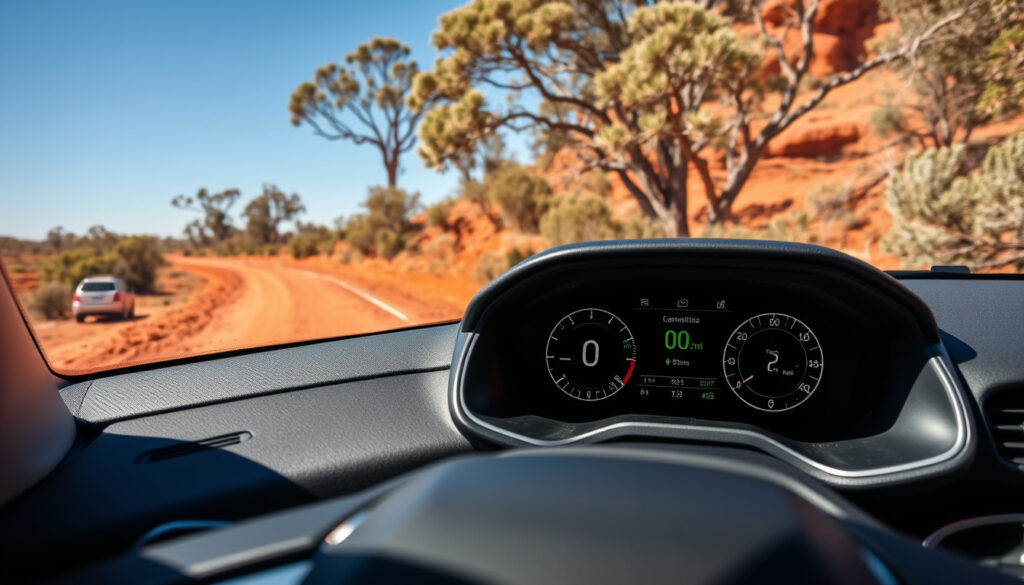
Tyre Pressure Monitoring System – Best Options in Australia
What is a Tyre Pressure Monitoring System?
A tyre pressure monitoring system, commonly abbreviated as TPMS, is an electronic device designed to continuously track the air pressure inside vehicle tyres. The technology communicates real-time pressure data to the driver through a dedicated monitor mounted inside the vehicle cabin, providing immediate alerts whenever tyre pressure falls outside safe thresholds. These systems have become increasingly relevant for Australian drivers, particularly those operating four-wheel drives, caravans, and trailers across diverse terrain and road conditions.
The fundamental purpose of any tyre pressure monitoring system centres on safety and efficiency. Under-inflated tyres generate excessive heat, increase stopping distances, and dramatically elevate the risk of catastrophic failure, especially during high-speed highway driving or extended outback touring. Factory-fitted TPMS has become standard on many new vehicles sold in Australia due to imported regulations from the United States and European Union markets. However, the same mandate does not extend to trailers, caravans, or pre-fitted vehicles, leaving a significant gap in protection for many Australian road users.
Two primary types of tyre pressure monitoring systems exist in the marketplace. Direct TPMS uses sensors mounted directly onto the tyre valve or inside the tyre cavity, measuring pressure and temperature with precision accuracy. Indirect TPMS, by contrast, relies on the vehicle’s anti-lock braking system sensors to detect changes in tyre rotation that indicate pressure loss. The majority of aftermarket tyre pressure monitoring system options available through Australian retailers employ direct measurement technology, offering superior accuracy and the flexibility to monitor multiple trailers or auxiliary axles simultaneously.
Direct TPMS sensors screw onto valve stems externally for straightforward installation, while internal sensors require professional fitting but offer enhanced security and longevity. External sensors remain the preferred choice for most caravan and trailer applications due to their replaceable batteries and tool-free maintenance.
Understanding the Core Components
Every tyre pressure monitoring system comprises three essential elements working in concert. The sensors, whether external or internal, continuously measure tyre pressure and temperature before transmitting data via radio frequency to a central receiver. The receiver, typically a compact monitor with a colour LCD display, processes incoming signals and presents pressure readings in PSI or bar units alongside temperature data. Alert mechanisms complete the system, triggering audible warnings and visual indicators when pressure deviates beyond preset parameters, whether through gradual slow leaks or rapid pressure loss events.
Key Benefits of Installing a TPMS
- Real-time monitoring of tyre pressure across all axles, including trailers and caravans
- Early detection of slow leaks before they develop into dangerous situations
- Improved fuel efficiency through maintaining optimal tyre pressure
- Extended tyre lifespan by preventing uneven wear from under-inflation
- Enhanced safety for family caravanning trips, particularly on remote outback routes
- Reduced risk of tyre blowouts during high-speed motorway driving
- Peace of mind when transporting heavy loads or operating multiple trailers
TPMS Snapshot: Key Features and Specifications
| Feature | Typical Specification | Example Models |
|---|---|---|
| Sensors per standard kit | 4 sensors | Supercheap Auto range, Oricom TPS10 |
| Maximum wheels supported | Up to 36 wheels | TyreDog multi-axle systems |
| Display type | 3.5-inch LCD or solar-assisted | Safety Dave ST-3000, Oricom TPS10 |
| Alert mechanism | Audible buzzer + visual icons | All major brands |
| Signal range | 10+ metres standard, extended with booster | Safety Dave repeater kit |
| Pressure units | PSI, bar, or kPa selectable | Most aftermarket systems |
| Temperature monitoring | Yes, Celsius and Fahrenheit | iCheckTPMS, TyreDog |
| Battery type (sensors) | CR2032 or equivalent user-replaceable | Varies by manufacturer |
| Price range (AUD) | $100 to $530 for complete kits | Basic 4-sensor to premium systems |
Major Australian retailers including Supercheap Auto, Repco, and ARB stock TPMS products, though specific in-house branded models have not received dedicated 2026 review coverage. Safety Dave and TyreDog remain the most frequently highlighted brands across independent Australian automotive publications.
What is the Best Tyre Pressure Monitoring System in Australia?
Determining the best tyre pressure monitoring system for Australian conditions requires careful consideration of local driving patterns, vehicle combinations, and terrain demands. The Safety Dave ST-3000 has emerged as the leading aftermarket TPMS option for 2026, earning particular commendation from four-wheel drive enthusiasts and caravan owners who demand reliable performance across extended touring applications. The system distinguishes itself through support for up to 22 individual sensors, comprehensive real-time display of both pressure and temperature readings, and an optional signal repeater that addresses connectivity challenges when monitoring trailers positioned at considerable distances from the towing vehicle.
The Safety Dave ST-3000 retails at approximately $530 for an eight-sensor kit, positioning it at the premium end of the market spectrum. Reviewers have praised its robust construction and Australian-based technical support, though they note that trailers exceeding ten metres may experience signal degradation without the additional booster unit. For drivers prioritising comprehensive multi-axle monitoring on large caravans or dual-trailer configurations, this trade-off between investment and functionality often proves acceptable given the peace of mind delivered through continuous monitoring.
Alternative options worth considering include the Oricom TPS10, which integrates solar-assisted power to reduce reliance on USB charging and offers individual tyre alerts that help pinpoint specific problem areas during pre-trip inspections. TyreDog systems appeal to users operating mixed vehicle configurations where tow vehicles and trailers operate at substantially different recommended pressures, with wide PSI range capability accommodating everything from light truck tyres to heavy caravan rubber. For heavy-duty applications involving trucks, coaches, or large dual-trailer setups, Safe-T-Tyre supports up to 34 sensors, providing monitoring capacity that far exceeds most domestic requirements.
Comparing Leading TPMS Brands in Australia
| Brand/Model | Sensors Supported | Key Features | Approx. Price (AUD) | Best Application | Considerations |
|---|---|---|---|---|---|
| Safety Dave ST-3000 | Up to 22 | LCD display, real-time PSI/temp, signal repeater option, Australian support | $530 (8-sensor) | Caravans, 4WD touring, multi-axle combinations | May require booster for trailers over 10m |
| Oricom TPS10 | Flexible (4+) | Solar receiver, individual tyre alerts, external sensors | Not specified | Value-conscious 4WD/caravan touring | Initial programming required for setup |
| TyreDog | Flexible to multi-axle | Wide PSI range, per-tyre threshold settings | Not specified | Mixed tow vehicle and trailer pressures | Limited multi-vehicle expandability |
| Safe-T-Tyre | Up to 34 | Heavy-duty industrial capability | Not specified | Dual-trailer configurations, large commercial rigs | Overkill for basic passenger setups |
| iCheckTPMS | Varies by kit | Background monitoring, automatic alert generation | Not specified | Hands-off operation preference | Fewer dedicated 2026 rankings available |
Installation Considerations
The installation process for aftermarket tyre pressure monitoring systems has been deliberately designed to minimise technical barriers for everyday users. External sensors attach directly to tyre valve stems using threaded caps, requiring no wheel removal or professional assistance for standard applications. Most complete kits can be installed within 30 to 60 minutes by individuals with basic mechanical understanding, with solar-powered models offering the additional convenience of automatic wake functionality when the vehicle begins moving.
For four-wheel drive and caravan combinations requiring monitoring across both the tow vehicle and towed unit, positioning the display monitor near the driver through cigarette socket or USB power connection ensures visibility without obstruction. Programmable threshold settings allow individual pressure targets for each tyre position, accommodating the different requirements between front and rear axles or between steer tyres and trailer units. Testing the system during actual driving rather than stationary monitoring helps identify any signal reception issues caused by interference from surrounding structures or high-speed air turbulence.
Trailers exceeding 10 metres in length from the towing vehicle’s rear axle may experience intermittent signal connectivity at highway speeds. Australian reviewers specifically recommend the Safety Dave signal repeater for long caravans and horse floats operating on arterial roads where sustained speeds amplify signal disruption from bodywork and distance.
How Long Do TPMS Sensors Last and When to Replace Batteries?
Sensor longevity represents one of the most frequently asked questions among prospective TPMS purchasers, with battery life directly impacting ongoing maintenance costs and system reliability. Industry sources consistently indicate that properly maintained TPMS sensors deliver functional lifespans ranging from five to ten years under normal operating conditions. However, actual battery duration depends substantially on usage patterns, with sensors transmitting frequently during long highway journeys depleting power faster than those in vehicles used primarily for short urban trips with extended parking periods.
The Safety Dave monitor itself incorporates a rechargeable battery providing up to 80 hours of operation between charges. This extended capacity proves particularly valuable during remote touring where access to power sources remains limited. The external sensors, while not specifying exact battery duration, are designed with user-replaceable cells, allowing straightforward swaps without requiring professional service appointments or complete sensor replacement.
General TPMS guidance suggests sensor battery replacement intervals spanning one to five years depending on transmission frequency, with heavy commercial use at the shorter end of the range and light recreational use approaching the longer duration. Solar and USB hybrid models like the Oricom TPS10 offer continuous power harvesting that extends monitor operation indefinitely while the sensors themselves rely on conventional button batteries for their independent monitoring functions.
Maximising Sensor Battery Life
- Select systems with adjustable alert thresholds to reduce unnecessary transmissions
- Choose external sensors with low-power modes during extended vehicle storage periods
- Purchase sensors with user-replaceable CR2032 batteries rather than sealed internal units
- Consider solar-powered monitors to reduce reliance on vehicle power systems
- Maintain consistent tyre pressure to minimise the alert triggers that activate transmission
- Store spare batteries with vehicle emergency kit for remote area replacements
Replacing TPMS Batteries: Practical Steps
External TPMS sensors typically contain CR2032 or equivalent button batteries accessible by unscrewing the sensor cap from the valve stem attachment. Owners should consult their specific manufacturer documentation for exact procedures, as designs vary between brands. Most external sensors can be removed, opened, and have batteries swapped within minutes, making this a genuinely DIY maintenance task that doesn’t require workshop facilities or technical expertise.
Internal sensors present greater replacement challenges, often necessitating tyre removal by a qualified installer and occasional re-learning procedures for the vehicle’s receiver module. Given this complexity, some owners prefer purchasing vehicles already equipped with factory TPMS for the primary axles, reserving aftermarket external systems for trailer monitoring where maintenance accessibility outweighs aesthetic considerations.
TPMS for 4WD, Caravans and Trailers?
The relationship between tyre pressure monitoring systems and recreational vehicle combinations in Australia warrants specific attention given the nation’s strong caravan and four-wheel drive culture. Unlike factory-fitted systems on modern passenger vehicles, aftermarket TPMS becomes essential for trailers, caravans, horse floats, and boat trailers that lack integrated monitoring capability. The Australian outback presents particular challenges, with remote routes potentially hundreds of kilometres from the nearest township creating genuine safety implications when tyre failures occur in isolated locations.
Four-wheel drive owners benefit equally from TPMS investment, particularly those pursuing corrugated outback tracks where sudden pressure changes from impacts occur without warning. The ability to monitor tyre temperatures alongside pressure provides critical advance warning of heat buildup that precedes structural tyre failure. Reviews highlight the Oricom TPS10 and Safety Dave systems as particularly well-suited to touring combinations, with individual tyre alerts enabling rapid identification of problems before they escalate during family holidays.
Monitoring Multi-Axle Configurations
Large caravans frequently feature tandem axles with four or six tyre positions requiring simultaneous monitoring. Standard four-sensor kits address basic trailer requirements, but comprehensive protection for serious touring demands expansion capabilities that support the full wheel count. The Safety Dave ST-3000’s 22-sensor capacity accommodates even the largest twin-axle caravans with capacity to spare for additional trailers or support vehicles in convoy configurations.
Dual-trailer setups present the most demanding monitoring scenarios, where independent pressure targets for each trailer combine with signal range challenges created by considerable distance between the towing vehicle and rearmost axle. Heavy-duty options like Safe-T-Tyre, supporting up to 34 sensors, address these requirements for commercial operators, though the complexity and cost may exceed practical needs for domestic recreational combinations.
Signal Boosters and Range Extension
Signal boosters, also marketed as repeaters, address the connectivity limitations inherent in wireless TPMS technology when monitoring distant trailers. The Safety Dave optional signal repeater specifically targets configurations where trailers extend beyond ten metres from the towing vehicle’s receiver antenna, amplifying radio frequency transmissions to maintain reliable monitoring at highway speeds where vibration and bodywork interference intensify signal disruption.
Installing a signal booster typically involves mounting a secondary receiver unit near the trailer’s tyre positions, with a dedicated power connection completing the setup. This additional complexity increases overall system cost and installation time but may prove essential for safe operation of long caravans on unrestricted regional roads where sustained speeds place maximum stress on trailer tyre components.
TPMS Technology Evolution and Timeline
Understanding the development trajectory of tyre pressure monitoring technology provides useful context for evaluating current market offerings and anticipating future developments. The regulatory mandating of TPMS in new vehicles originated from safety concerns in the United States, where the Transportation Recall Enhancement, Accountability, and Documentation Act required factory-fitted systems beginning in 2007 for vehicles below certain weight ratings. European Union markets followed with comparable requirements shortly thereafter, creating the baseline technology foundation that aftermarket manufacturers subsequently adapted for broader applications.
Australian regulatory discussion regarding mandatory TPMS remained relatively limited through the mid-2010s, with factory-fitted systems appearing primarily on imported vehicles that already incorporated the technology for compliance with overseas markets. The independent consumer advocacy organisation Choice publishes independent buying guides based on systematic testing methodologies, providing evaluation frameworks that help consumers compare products across brands without commercial influence. The subsequent aftermarket boom, particularly evident in Australian-specific product development from brands like Safety Dave and TyreDog, emerged specifically to address the gap left by regulations that mandated TPMS for tow vehicles but not for the trailers they tow.
Key Milestones in TPMS Development
- 2007 – United States mandates factory TPMS for new vehicles under TREAD Act requirements
- 2009 – European Union implements comparable TPMS requirements for new passenger vehicles
- 2012-2015 – Australian market sees growing aftermarket TPMS availability from specialist retailers
- 2015 – Consumer Choice publishes initial TPMS buying guidance for Australian consumers
- 2018-2020 – Solar-powered and hybrid TPMS monitors enter mainstream Australian market
- 2024-2026 – Australian brands expand multi-axle capacity; Safety Dave ST-3000 leads independent rankings
While factory TPMS has become standard on new passenger vehicles sold in Australia, no national mandate requires the technology for trailers, caravans, or pre-2024 vehicles. This regulatory gap justifies the investment in aftermarket systems for anyone regularly towing, as tyre failures on trailers remain exempt from monitoring requirements that apply to tow vehicles.
What We Know for Certain Versus What Remains Unclear
Honest evaluation of any product category requires acknowledging the boundaries between established facts and areas where uncertainty persists. This distinction proves particularly relevant for TPMS purchasing decisions, where marketing claims must be weighed against verified performance data and documented user experiences.
Established Information
| Category | Confirmed Details |
|---|---|
| Sensor lifespan | 5-10 years with normal use; batteries require replacement every 1-5 years |
| Regulatory status | Not mandatory for trailers or aftermarket in Australia; factory-fitted standard on new vehicles |
| Installation time | 30-60 minutes for external sensor kits; no professional assistance required |
| Market leaders | Safety Dave, Oricom, TyreDog dominate Australian independent review coverage |
| Signal range | Standard 10+ metres; boosters available for longer trailers |
| Price range | $100-$530 for comprehensive systems; 8-sensor Safety Dave kit approximately $530 |
Information That Remains Unclear
| Category | Outstanding Questions |
|---|---|
| Specific battery duration | Precise battery replacement intervals vary by brand; not consistently documented in 2026 reviews |
| Sensor accuracy comparisons | Head-to-head accuracy testing data across brands not published by independent Australian laboratories |
| Signal interference patterns | Limited public documentation on performance degradation under specific conditions |
| Long-term reliability data | Multi-year user experience aggregated data not publicly available for Australian conditions |
| Future regulatory changes | No confirmed timeline for potential Australian trailer TPMS mandates |
The Australian Context: Why TPMS Matters Locally
Australia’s distinctive driving environment creates circumstances where tyre pressure monitoring delivers exceptional value compared to more benign motoring conditions elsewhere. The combination of vast distances, limited roadside assistance in remote regions, high-speed regional highways, and the substantial proportion of recreational vehicles towing heavy loads generates risk profiles that fundamentally differ from urban commuter applications where factory TPMS has become ubiquitous.
Outback touring routes through areas like the Simpson Desert, Cape York, or the Kimberley expose vehicles and trailers to conditions that stress tyre components far beyond typical suburban use. Corrugated dirt tracks generate sudden impacts that can cause immediate pressure loss, while prolonged highway driving at elevated speeds creates heat buildup in under-inflated tyres that may not manifest until catastrophic failure occurs miles from assistance. The safety case for TPMS on any vehicle undertaking serious Australian touring becomes compelling when these factors accumulate.
Caravanning has experienced substantial growth in Australia, with tandem-axle configurations increasingly common as families pursue comfortable remote area exploration. The trailers themselves operate without any integrated monitoring capability, creating complete dependence on aftermarket solutions for the advance warning that enables drivers to address pressure issues before they develop into roadside emergencies. Industry observers note that this disconnect between sophisticated tow vehicles and unmonitored trailers represents a genuine safety gap that TPMS technology directly addresses.
Expert Sources and Industry References
Several authoritative sources inform contemporary understanding of tyre pressure monitoring systems in the Australian context. The consumer advocacy organisation Choice publishes independent buying guides based on systematic testing methodologies, providing evaluation frameworks that help consumers compare products across brands without commercial influence. Their coverage emphasises practical considerations including installation complexity, alert responsiveness, and display readability that pure specifications alone cannot convey.
Factory TPMS is now common on new Australian vehicles due to US and EU mandates, but aftermarket solutions remain essential for trailers and caravans with 4-sensor kits and displays providing the monitoring gap coverage.
— Choice Tyre Pressure Monitoring Systems Buying Guide
Automotive publications including 4×4 Australia and Caravan World contribute hands-on reviews from experienced testers who evaluate TPMS performance under genuine Australian touring conditions rather than laboratory benchmarks. These reviews frequently identify practical limitations and advantages that only emerge through extended field testing, providing insights particularly valuable for consumers evaluating premium purchases where investment levels justify thorough investigation.
The Safety Dave ST-3000 monitor has up to 80 hours of rechargeable battery life, while sensors feature long-life replaceable batteries suitable for extended touring applications.
— 4×4 Australia Safety Dave Tyre Pressure Monitoring System Review
Summary and Recommendations
Tyre pressure monitoring systems represent a genuinely valuable safety investment for Australian drivers operating four-wheel drives, caravans, trailers, or any vehicle combination where factory monitoring does not extend to towed configurations. Current market leaders including the Safety Dave ST-3000, Oricom TPS10, and TyreDog range offer proven reliability supported by positive independent review coverage, with pricing ranging from approximately $100 for basic four-sensor kits to $530 for comprehensive multi-axle systems like the Safety Dave eight-sensor configuration.
For most Australian touring applications, an external sensor system with LCD monitor provides the optimal balance between installation simplicity, maintenance accessibility, and monitoring capability. Drivers of long trailers exceeding ten metres should factor signal booster requirements into their purchasing decisions, while those operating multiple trailers or commercial configurations may warrant the expanded capacity offered by premium multi-axle systems. Battery maintenance remains straightforward for external sensors with user-replaceable cells, though planning ahead for remote area travel by carrying spares with your emergency kit represents sensible preparation.
Before purchasing, verify that your specific vehicle combination and tyre requirements align with the sensor capacity and pressure range specifications of your preferred system. Those considering the Kia Tasman Price and Specs for potential touring applications should factor TPMS costs into overall budgeting alongside any accessories from your preferred automotive retailers. The investment in reliable tyre monitoring pays dividends through enhanced safety, improved fuel efficiency, and extended tyre life that substantially exceed the initial purchase cost over typical ownership periods.
Frequently Asked Questions
How does a tyre pressure monitoring system actually work?
External sensors mounted on tyre valves continuously measure air pressure and temperature, transmitting data via radio frequency to a dashboard-mounted receiver. The monitor displays current readings in real-time and triggers audible and visual alerts when pressure falls outside preset thresholds, providing immediate warning of slow leaks, rapid pressure loss, or overheating tyres.
Is TPMS mandatory in Australia for trailers and caravans?
No national mandate requires tyre pressure monitoring systems for trailers, caravans, or older vehicles in Australia. Factory TPMS is standard on new passenger vehicles due to US and EU import requirements, but aftermarket TPMS remains entirely voluntary for towed vehicles despite recommendations from safety organisations.
What is a TPMS signal booster and when do I need one?
A signal booster or repeater amplifies the wireless transmission between trailer sensors and the towing vehicle receiver. Australian reviewers recommend boosters for trailers exceeding 10 metres in length where interference from bodywork and distance can cause signal dropout at highway speeds, resulting in missed alerts during critical driving situations.
How long can I expect TPMS sensors to last before battery replacement?
Industry sources indicate TPMS sensors typically function for five to ten years with individual battery replacement required every one to five years depending on transmission frequency and usage patterns. Solar-powered monitors can extend receiver operation indefinitely, but sensors themselves rely on conventional button batteries that remain user-replaceable in external configurations.
Can I install TPMS myself or do I need professional assistance?
External sensor TPMS kits are designed for DIY installation, with most systems installable within 30-60 minutes without specialised tools. Sensors screw directly onto existing valve stems without wheel removal, and monitor mounting uses simple adhesive or bracket configurations. Internal sensors that mount inside the tyre cavity require professional tyre fitting services.
How many sensors do I need for a caravan with tandem axles?
A standard four-sensor kit monitors a single-axle trailer with two tyre positions, though tandem-axle configurations typically require four or six sensors depending on whether each tyre position receives independent monitoring. Premium systems like the Safety Dave ST-3000 support up to 22 sensors, accommodating even the most comprehensive multi-trailer touring combinations.
What happens if my TPMS sensor battery dies while touring remotely?
External sensor batteries can be replaced by the user if spare batteries are carried with the vehicle. Most sensors use standard CR2032 or equivalent button batteries available from convenience stores and service stations throughout regional Australia. Planning ahead by carrying spares as part of your touring kit eliminates this concern entirely.
Do solar-powered TPMS monitors work reliably in all weather conditions?
Solar-assisted TPMS monitors incorporate USB charging as backup capability for periods of limited sunlight, such as extended cloudy weather or garage storage. Models like the Oricom TPS10 offer dual power options ensuring continuous operation regardless of environmental conditions, with automatic power switching between solar and USB sources.
More related posts
 Lizzy McAlpine: Biography, Songs, and Rise to Fame
 Regretting You Book: Plot, Ending, and Reader Questions Answered
 Evan Spiegel: Biography, Net Worth, Family, and Snapchat’s Future
 Arnold Schwarzenegger: Health, Net Worth, and Life
 NRL Grand Final 2025 Time: Kickoff & Schedule
 Costco Fuel Marsden Park – Prices, Hours, Membership Guide
 Chad Warner: Partner, Contract, AFL Career & Family
 Naoya Inoue: Greatest Japanese Boxer Ever? Records & Legacy
