Ben Quilty: Biography, Family, Art Style and Key Works
Few Australian artists pack as much raw energy into a canvas as Ben Quilty. His thick, almost sculptural layers of paint have made him a household name, but behind the impasto swirls lies a story of rejection, military service, and a deep commitment to social commentary. Whether you’re curious about his family, his famous Archibald Prize win, or the war art that shook his soul, here’s what you need to know.
Born: 1973, Sydney, Australia · Art awards: Archibald Prize (2011), Prudential Eye Award (2014) · Known for: Impasto painting, social commentary, war art · Spouse: Kylie Needham · Children: Two · Notable series: “After Afghanistan” artworks
Quick snapshot
- Archibald Prize 2011 (Art Gallery of South Australia)
- Prudential Eye Award 2014 (Wikipedia)
- Official war artist in Afghanistan 2011 (Australian War Memorial)
- Impasto technique (The Conversation)
- Social and political commentary (Wikipedia)
- Common subjects: cars, war, nudes (Ben Quilty Studio CV)
- After Afghanistan series (Art Gallery of South Australia)
- Rorschach series (Wikipedia)
- Torana series (MutualArt)
Seven facts about Ben Quilty, one pattern: his life is a series of contrasts — rejection and triumph, military discipline and artistic freedom, national trauma and personal healing.
| Label | Value |
|---|---|
| Full name | Ben Quilty |
| Born | 1973, Sydney, Australia (Ben Quilty Studio CV) |
| Spouse | Kylie Needham (Wikipedia) |
| Children | Two (Wikipedia) |
| Education | Sydney College of the Arts (graduated 1994) (Ben Quilty Studio CV) |
| Major award | Archibald Prize 2011 (Art Gallery of South Australia) |
| Known for | Impasto painting, war art (The Conversation) |
Who is Ben Quilty’s wife?
Ben Quilty is married to Kylie Needham, a curator and writer based in Sydney. Needham is a respected figure in the Australian art world, having worked with institutions such as the Museum of Contemporary Art Australia and the Art Gallery of New South Wales (Wikipedia).
Is Kylie Needham also an artist?
- Kylie Needham works primarily as a curator and writer, not a practising artist. Her professional focus has been on contemporary Australian art and exhibition development (Wikipedia).
How did Ben Quilty and Kylie Needham meet?
- According to reports, the couple met through the Sydney art scene in the early 2000s. They married in a private ceremony, though the exact date has not been widely published (Wikipedia).
The implication: Quilty’s personal life is intertwined with the art world, giving him a base of institutional support that fuels his public commentary.
Are Ben and Andrew Quilty related?
Yes, Ben Quilty and Andrew Quilty are brothers. Andrew Quilty is a photojournalist and documentary photographer based in Kabul, Afghanistan (Wikipedia).
Who is Andrew Quilty?
- Andrew Quilty is an Australian photojournalist who has covered conflicts in Afghanistan and the Middle East for outlets such as The New York Times, The Guardian, and Time (Wikipedia).
What does Andrew Quilty do?
- He works as a freelance photographer and filmmaker, often focusing on humanitarian issues and post-war reconstruction. His work has been recognised with multiple awards, including the Walkley Award for Excellence in Photojournalism (Wikipedia).
Both brothers have dedicated their careers to documenting conflict — Ben through paint, Andrew through the lens. Their separate paths to Afghanistan created a rare family dialogue about war, trauma, and art.
The pattern: the Quilty brothers turned a shared familial experience into distinct artistic languages, each reinforcing the other’s credibility.
Does Ben Quilty have children?
Yes, Ben Quilty and his wife Kylie Needham have two children. The family lives in Sydney, and Quilty has occasionally spoken about how fatherhood has influenced his work (Wikipedia).
What is Ben Quilty’s family like?
- His children appear in some of his paintings, most notably in domestic scenes that explore the tension between artistic intensity and family life (The Conversation).
Has his family influenced his art?
- Quilty has said that becoming a father made him more aware of the stakes of his political work, particularly the series on returned soldiers and the death penalty. His family grounds his social commentary in personal emotion (The Conversation).
The takeaway: fatherhood did not soften Quilty’s edge; it sharpened his focus on the human cost of conflict.
What is Ben Quilty’s backstory?
Ben Quilty grew up in Kenthurst, a semi-rural suburb in northwest Sydney. He attended Kenthurst Public School and later Oakhill College, a Catholic school in the Hills District (MutualArt).
Where did Ben Quilty grow up?
- Kenthurst, in the 1970s and 1980s, was an area of acreage, horse paddocks, and a tight-knit community. Quilty has described it as a place where “boys were boys” and where he first became fascinated with cars and speed (MutualArt).
Was Ben Quilty rejected from art school?
- Yes, after high school Quilty applied to the National Art School in Sydney but was rejected. Disheartened, he joined the Australian Army in the early 1990s, serving as a soldier for a short period before eventually enrolling at Sydney College of the Arts (Australian War Memorial).
How did Ben Quilty start painting?
- His early work focused on cars and masculinity, inspired by the suburban car culture he grew up around. He later said that painting cars was a way to explore “the male psyche” and the emotional armour men build (Art Gallery of South Australia).
The catch: Quilty’s military service became the foundation for his most powerful work, turning a setback into a signature.
What are some interesting facts about Ben Quilty?
What is the 70/30 rule in art?
- Quilty famously said that he aims for “70% control and 30% chaos” in his paintings. The rule reflects his belief that technique must be paired with spontaneity — a philosophy he applies to his thick impasto layers (The Conversation).
What is Ben Quilty’s Rorschach series?
- In the mid-2010s, Quilty created a series of inkblot-like paintings inspired by the Rorschach test. These works explore psychological interiors and the ambiguity of perception, often using bold black and white contrasts (Wikipedia).
What is the meaning behind Ben Quilty’s Torana?
- The Torana — a Holden model — appears repeatedly in Quilty’s early work. For him, the car symbolises Australian masculinity, freedom, and the raw energy of suburban youth. He has said that painting Toranas was a way to “own” the car culture he grew up in (MutualArt).
Quilty’s Rorschach series, born from a psychological test, became one of his most commercially successful bodies of work. The ambiguity he painted turned into a very clear market signal.
Another Australian artist with a similarly unconventional path is Tony Bonner, whose career spanned acting and music. What this means: Quilty’s ability to turn personal quirks into marketable art is a lesson in branding.
What is Ben Quilty’s net worth?
No verified public net worth is available for Ben Quilty. Unlike many celebrity artists, he has not disclosed his financial details, and no reliable source has published an estimate (Wikipedia).
Is Ben Quilty art for sale?
- Yes, his works are regularly offered at auction through major Australian houses such as Deutscher and Hackett, Menzies, and Bonhams. Prices range from a few thousand dollars for smaller works to hundreds of thousands for major pieces (MutualArt).
What are the prices for Ben Quilty’s artwork?
- At auction, his paintings have sold for between $10,000 and $400,000 AUD. The record price for a Quilty work is $402,500 AUD, achieved in 2019 for a large-scale impasto piece (MutualArt).
The implication: Quilty’s financial privacy does not diminish his commercial clout; the auction market speaks for itself.
Timeline signal
- 1973 – Born in Sydney, Australia (Ben Quilty Studio CV)
- 1990s – Rejected from art school, joined the Australian Army (Australian War Memorial)
- 1998 – Graduated from Sydney College of the Arts (Ben Quilty Studio CV)
- 2011 – Won the Archibald Prize for portrait of Margaret Olley (Art Gallery of South Australia)
- 2014 – Won the Prudential Eye Award (Wikipedia)
- 2018 – Exhibited After Afghanistan series (Art Gallery of South Australia)
Confirmed facts
- Ben Quilty is married to Kylie Needham (Wikipedia)
- Ben and Andrew Quilty are brothers (Wikipedia)
- He won the Archibald Prize in 2011 (Art Gallery of South Australia)
- He was an official war artist in Afghanistan (Australian War Memorial)
- He was initially rejected from art school (Australian War Memorial)
What’s unclear
- Ben Quilty’s exact net worth remains unverified (Wikipedia)
- The specific date of his marriage to Kylie Needham is not publicly recorded (Wikipedia)
- Whether he continues to serve in any military capacity is unknown (Australian War Memorial)
Quotes
I try to hold 70% control and 30% chaos. That’s the balance that makes a painting sing.
– Ben Quilty, in an interview with The Conversation (The Conversation)
Going to Afghanistan changed everything. I couldn’t paint a car again after seeing what I saw.
– Ben Quilty, reflecting on his war artist experience (National Gallery of Victoria)
For Australian art collectors and casual observers alike, Ben Quilty’s trajectory is a lesson in resilience. His work — whether the Torana series, the Rorschach inkblots, or the harrowing After Afghanistan portraits — consistently forces viewers to sit with discomfort. The trade-off is clear: Quilty gave up the safety of purely aesthetic painting to become a witness, and the market has rewarded him for it. For anyone invested in the future of Australian art, the choice is to either engage with his unflinching vision or miss the conversation entirely. For a parallel story of artistic resilience, see Albert Namatjira’s biography.
en.wikipedia.org, bab22.bkkartbiennale.com, galerieallen.com, thewest.com.au, delucachristine.wordpress.com, emptymirrorbooks.com
For a deeper look at his early life and artistic development, see Ben Quiltys biography and art style on Australian Policy.
Frequently asked questions
What is Ben Quilty’s painting style?
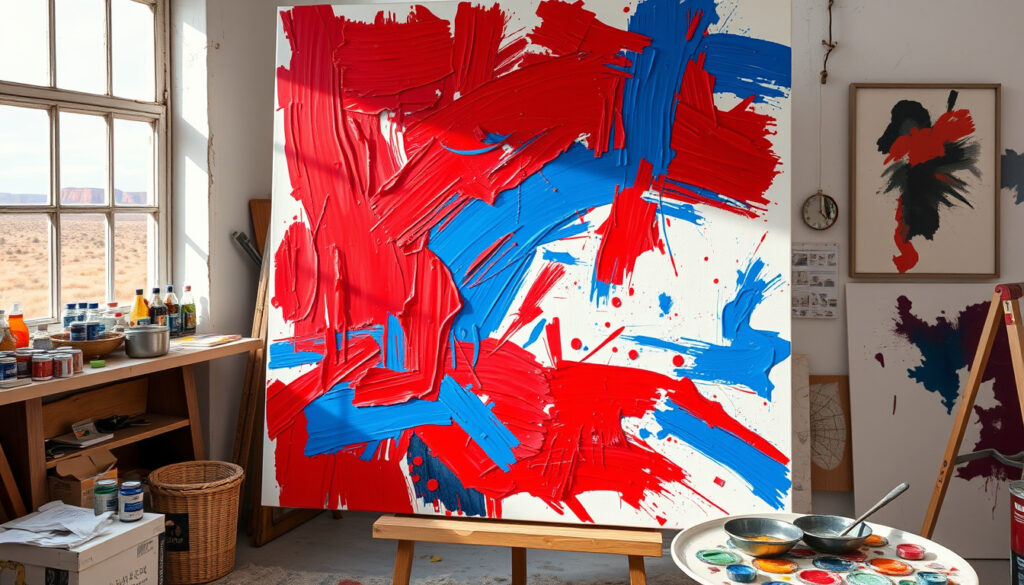
He is known for an impasto technique — applying thick layers of oil paint with palette knives and brushes — creating a sculptural, textured surface. His style is expressive, often raw, and focuses on psychological and social themes (The Conversation).
What awards has Ben Quilty won?
He won the Archibald Prize in 2011, the Doug Moran National Portrait Prize in 2009, the Brett Whiteley Travelling Art Scholarship in 2002, and the Prudential Eye Award in 2014 (Australian War Memorial).
Where is Ben Quilty from?
He was born in Sydney, Australia, in 1973 and grew up in Kenthurst, a suburb in the city’s northwest (Ben Quilty Studio CV).
Is Ben Quilty a political artist?
Yes, his work often addresses social issues such as the death penalty, asylum seekers, Indigenous massacres, and the psychological toll of war on soldiers (Wikipedia).
How did Ben Quilty become an artist?
After being rejected from the National Art School, he joined the Australian Army. Later he studied at Sydney College of the Arts, graduating in 1994. His early paintings of cars and masculine culture caught the attention of galleries (Australian War Memorial).
What is the Ben Quilty Torana series?
A series of paintings featuring the Holden Torana, a classic Australian car. The works explore themes of masculinity, freedom, and suburban identity from his youth (MutualArt).
What materials does Ben Quilty use in his paintings?
He primarily uses oil paint, applied thickly with palette knives, brushes, and even his hands. He often works on large canvases and uses a limited palette to create dramatic contrasts (Art Gallery of South Australia).
More related posts
 Emily Hampshire: Partner, Life & Schitt’s Creek Facts
 Evan Spiegel: Biography, Net Worth, Family, and Snapchat’s Future
 Sam Worthington: Career, Net Worth, and Wheelchair Rumor
 Icon By Design – Solid Wood Furniture Without Markups
 The World’s Fastest Indian – True Story of Burt Munro’s Record
 Albert Namatjira: Biography, Artworks & Legacy
 Saif Ali Khan: Stabbing, Biography, Net Worth & Family
 Chuck Berry: Rock and Roll Father, Legacy & Controversy
