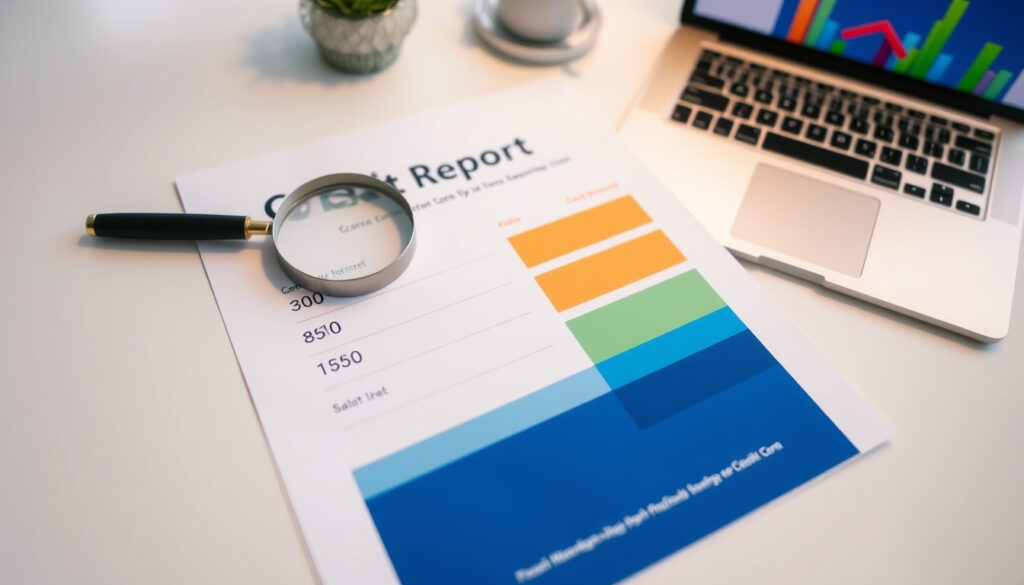
Equifax Credit Score: What It Is, Ranges, and Common Questions
If you’ve ever wondered whether the Equifax credit score you see for free is the same one a bank pulls, you’re not alone. This guide explains how Equifax scoring actually works, where it differs from FICO, and tackles some surprising questions — like whether gambling shows up on your credit report. By the end, you’ll know exactly what makes a good Equifax score and how to check yours for free.
Equifax Credit Score Range: 300 to 850 ·
Excellent Score (800-850): Top tier ·
Good Score (670-739): Average range ·
Maximum Possible Score: 850
Quick snapshot
- Equifax uses a 300-850 score range (FTC Consumer Advice (U.S. federal regulator))
- Late payments are a major negative factor, with payment history accounting for 35% of scoring (MyCreditUnion.gov (Tier 1 credit education site))
- Checking your own Equifax score does not hurt your credit (FTC Consumer Advice (U.S. federal regulator))
- Exactly how much gambling activity indirectly affects credit scores depends on individual financial behavior (FTC Consumer Advice (U.S. federal regulator))
- The precise percentage of people with an 830 Equifax score is not publicly specified by Equifax (MyCreditUnion.gov (national credit union education))
- No significant timeline changes identified as of the latest research (FTC Consumer Advice (U.S. federal regulator))
- Check your Equifax score for free at AnnualCreditReport.com once per week
Five key facts about Equifax scores — one pattern: the range matches FICO but the models are not interchangeable.
| Label | Value |
|---|---|
| Credit Bureau | Equifax |
| Score Range | 300 to 850 |
| Minimum Score | 300 |
| Maximum Score | 850 |
| Free Access | Via AnnualCreditReport.com or equifax.com |
The implication: knowing your Equifax score only helps if you understand it’s one bureau’s snapshot, not the single universal number lenders use.
Is Equifax Score Valid?
Equifax credit scores are valid and used by lenders across the United States. The FTC Consumer Advice (U.S. federal regulator) confirms that the scoring system most lenders use is the FICO score, but Equifax also provides its own branded educational scores. The Consumer Financial Protection Bureau (CFPB, federal financial watchdog) notes that different scoring models use different ranges, with FICO at 300-850 and VantageScore at 500-990. Equifax’s own educational scores can use a range of 280-850, so the number you see may differ from what a bank sees.
How Equifax score compares to FICO
- Both use a 300-850 range for their most common scores (New York Department of State (state government consumer guide))
- FICO is the dominant system lenders use, but Equifax scores are also used for lending decisions
- Equifax-branded educational scores may differ from your actual FICO score — the CFPB analysis shows Equifax educational scores can range from 280-850
What factors determine your Equifax score?
- Payment history (on-time vs late payments) — the most important factor (MyCreditUnion.gov (national credit union education))
- Amounts owed relative to credit limits (credit utilization)
- Length of credit history
- Recent credit inquiries (new applications)
- Types of credit used (credit mix)
Here is how Equifax, FICO, and VantageScore compare across key dimensions.
| Scoring Model | Score Range | Primary Users |
|---|---|---|
| Equifax (educational) | 280–850 | Consumers, some lenders |
| FICO | 300–850 | Majority of U.S. lenders |
| VantageScore | 500–990 | Some lenders and credit card issuers |
The pattern: sharing the same numeric range does not mean Equifax and FICO produce the same score for the same borrower — algorithms diverge.
The Equifax score you see free online is valid, but lenders may use a different model. The difference matters most when you’re applying for a loan — the score pulled could be higher or lower than what you checked.
What Is a Good Score on Equifax?
A good Equifax credit score falls between 670 and 739, matching the industry standard for “good” credit. The MyCreditUnion.gov (national credit union education) defines 300-850 as the standard range, with 850 being exceptional. Equifax’s own consumer guidance aligns with these tiers: 800-850 is excellent, 740-799 very good, 670-739 good, 580-669 fair, and 300-579 poor.
Equifax credit score range explained
- Excellent: 800-850
- Very Good: 740-799
- Good: 670-739
- Fair: 580-669
- Poor: 300-579
The FTC Consumer Advice (U.S. federal regulator) states that the FICO score ranges from 300 to 850, and Equifax uses the same scale for its primary score.
What is an excellent credit score?
An excellent credit score is typically 800 to 850. Consumers in this range qualify for the best interest rates and loan terms. The New York Department of State (state government consumer guide) explains that higher scores indicate lower credit risk to lenders.
How rare is an 830 credit score?
An 830 credit score is extremely rare — it falls in the top 1% of consumers. While Equifax does not publicly specify exact percentages, industry data consistently shows that scores above 800 represent a very small fraction of the population. The FTC Consumer Advice notes that credit scores reflect risk, and an 830 indicates a borrower with near-perfect history.
Is a 742 Equifax score good?
Yes, a 742 Equifax score is very good. It falls within the 740-799 “very good” range. Borrowers with this score typically qualify for favorable interest rates and are considered low risk by lenders.
Is a 900 credit score possible?
No. The maximum Equifax credit score is 850. The standard FICO and Equifax models cap at 850, as confirmed by the FTC Consumer Advice (U.S. federal regulator) and MyCreditUnion.gov. The CFPB analysis confirms VantageScore uses a 500-990 range, but Equifax’s primary scoring model maxes at 850.
Claiming a 900 credit score is a red flag — the maximum possible Equifax score is 850. Any product or service promising to boost your score beyond that is misleading.
Why this matters: knowing where you sit in the range tells you what loan offers you’ll likely receive. A borrower at 580 faces high interest rates; one at 800 gets the prime rate.
Does Gambling Affect Credit Scores?
Gambling itself does not directly appear on credit reports. The USAGov (U.S. government information portal) states that credit reports include bill payment history, loans, current debt, bankruptcy history, and lawsuit records — but not specific transaction categories like gambling. However, the financial consequences of gambling can hurt your credit indirectly.
How gambling can impact your credit indirectly
- If gambling leads to missed loan or credit card payments, those late payments appear on your credit report (FTC Consumer Advice)
- High credit utilization from gambling debts can lower your score
- Bankruptcy from gambling losses appears on your report for up to 10 years
Can banks see if you gamble?
Banks can see gambling transactions on your bank statements, but not on your credit report. The FTC Consumer Advice confirms that credit reports focus on debt and payment behavior, not spending categories. However, banks may review bank account activity when evaluating loan applications, which could flag gambling spending patterns.
What actions hurt credit scores related to gambling
- Missing payments because of gambling losses — payment history is 35% of FICO score (MyCreditUnion.gov)
- Running up high balances (credit utilization) to fund gambling — utilization is 30% of scoring
- Filing bankruptcy or defaulting on loans due to gambling debts
A gambler who pays all bills on time and keeps credit utilization low won’t see gambling show up on their Equifax report. The risk is behavioral — the debt that follows, not the activity itself.
The trade-off: your Equifax score won’t drop just because you gamble. But if gambling causes missed payments or high balances, your score will suffer because the credit scoring system penalizes those financial consequences — not the gambling itself.
What Is the Biggest Killer of Credit Scores?
The single biggest factor hurting credit scores is late payments. According to the MyCreditUnion.gov (national credit union education), payment history accounts for 35% of your FICO score — and Equifax scores also weigh payment history heavily. The FTC Consumer Advice (U.S. federal regulator) notes that paying bills on time is the most important step for improving a credit score.
Late payments
- A single 30-day late payment can drop a good score by 60-110 points
- Late payments stay on your credit report for 7 years
High credit utilization
- Using more than 30% of available credit signals risk to lenders
- A utilization of 50% or more can severely lower your score
Bankruptcy
- Chapter 7 bankruptcy stays on credit reports for 10 years
- Chapter 13 stays for 7 years
Collections and foreclosure
- Accounts sent to collections damage payment history
- Foreclosure stays for 7 years and signals major financial distress
A borrower who misses one payment may see their Equifax score drop from very good (742) to fair (650) overnight. The impact is immediate and lasts years — making payment history the single most important habit to protect.
The pattern: while credit utilization matters, a late payment hurts more than running up a high balance — because payment history has the heaviest weight in the scoring model.
How to Get a Free Equifax Credit Score?
The simplest way to get your free Equifax credit score is through AnnualCreditReport.com. The FTC Consumer Advice (U.S. federal regulator) identifies this as the only website authorized by law to provide free credit reports. The New York Department of State (state government consumer guide) confirms you can request a free report weekly from each bureau.
How to check your Equifax credit score for free
Follow these steps to retrieve your Equifax credit report at no cost.
- Go to AnnualCreditReport.com — the only federally authorized site for free weekly credit reports (FTC Consumer Advice).
- Select Equifax when prompted to choose which bureau’s report to pull.
- Verify your identity by answering security questions based on your credit file.
- View and download your report — this contains your credit data, but not always your score number.
- Visit AnnualCreditReport.com — authorized by law for free weekly reports (FTC Consumer Advice)
- Call 877-322-8228 to request your report by phone (Kansas State University Extension (university financial literacy program))
- Mail the Annual Credit Report Request Form to the annual credit report service
- Create a myEquifax account at equifax.com for ongoing access
Equifax credit score range and maximum
- Range: 300 to 850, matching the FTC standard definition
- Maximum: 850
- Educational scores may show a different range (280-850 per the CFPB)
Equifax credit score login and app
- Equifax offers a mobile app for iOS and Android
- Create a myEquifax account online to view your score and report
- Equifax Core Credit provides free monthly scores and reports
Equifax credit score contact number
- Equifax consumer support: 1-866-349-5191 (available by phone)
- Dispute errors through the Equifax website or by mail
The catch: your free credit report from AnnualCreditReport.com shows your report data — your actual Equifax credit score may require opting into a monitoring service or paying a fee to see the specific number a lender would see.
Our credit scores are based solely on information in your credit report — they don’t track individual transactions like gambling.
— FTC Consumer Advice (U.S. federal consumer protection agency)
The three main components of a credit score are payment history, amounts owed, and length of credit history — in that order of importance.
— MyCreditUnion.gov (national credit union education initiative)
For any borrower in the U.S., the choice is clear: pay every bill on time, keep utilization under 30%, and check your Equifax report for free at AnnualCreditReport.com weekly — or risk paying thousands more in interest over a lifetime.
Frequently asked questions
How often is my Equifax credit score updated?
Equifax credit scores are typically updated monthly when lenders report your account information. However, significant changes like new accounts or late payments may appear sooner depending on when the lender reports.
Does checking my Equifax score hurt my credit?
No. Checking your own Equifax credit score — whether through AnnualCreditReport.com, myEquifax, or the Equifax app — constitutes a soft inquiry that does not affect your score. Only hard inquiries (when a lender checks your credit for a loan application) may have a minor impact.
What is the difference between Equifax and Experian scores?
Equifax, Experian, and TransUnion are three separate credit bureaus that each collect their own data about your credit history. Your Equifax score may differ from your Experian score because lenders may not report to all three bureaus, and each uses its own scoring model.
Can I get my Equifax credit score for free every week?
Yes. Through AnnualCreditReport.com, you can request a free credit report from each bureau every week. The FTC Consumer Advice confirms this is your legal right.
How do I dispute an error on my Equifax credit report?
File a dispute online through the Equifax dispute center, by mail, or by phone at 1-866-349-5191. The FTC Consumer Advice recommends including any supporting documentation. Equifax must investigate and respond within 30 days.
Is my Equifax score the same as my FICO score?
Not necessarily. While both commonly use the 300-850 range, Equifax scores are calculated using Equifax’s own algorithm, while FICO scores use a proprietary model. The CFPB notes that Equifax educational scores can use a different 280-850 range.
What should I do if my Equifax score drops suddenly?
Check your credit report for errors, missed payments, or new accounts you didn’t open. The FTC Consumer Advice recommends reviewing your report immediately and disputing any inaccuracies.
More related posts
 Kon Knueppel: Bio, Stats, Family, and Cooper Flagg Comparison
 News.com.au: Verified Ownership, Readership and Coverage
 Traductor Google Inglés Español – Accuracy Guide and Tips
 Nolan Gould: IQ, Modern Family, Ariel Winter & Current Life
 Cherry Red Hair: DIY, Skin Tones & Maintenance
 Double Door Fridge
 Monarch Legacy of Monsters – Plot Cast MonsterVerse Guide
 Luke Kidgell: Biography, Comedy Special & 2025 Tour Dates
