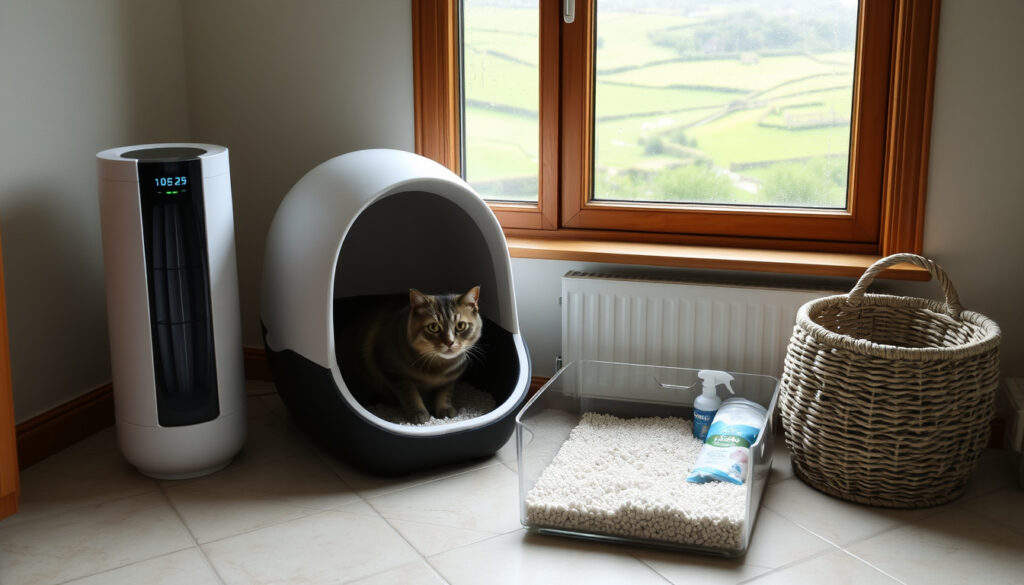
Cat Litter Box Guide: Vet-Approved Tips for Irish Homes
Anyone who shares a home with a cat knows the litter box is a daily reality—but it rarely gets the attention it deserves. Get the placement, cleaning routine, and setup right, and you’ll have a happier cat and a fresher-smelling house.
Number of indoor cats in Ireland: approximately 200,000 ·
Average litter box cleaning frequency recommended by vets: daily scoop, weekly full change ·
Percentage of cats that avoid covered litter boxes: up to 30% ·
Minimum number of litter boxes per cat: 1 per cat plus 1 extra
Quick snapshot
- One litter box per cat plus one extra is the standard recommendation (ASPCA (American animal welfare authority))
- Daily scooping and weekly full change keep ammonia low and cats comfortable (Texas A&M College of Veterinary Medicine (veterinary research institution))
- Covered boxes can cause respiratory irritation and behavioural avoidance (Urban Animal Veterinary Hospital (veterinary clinic))
- Long-term health effects of sleeping in the same room as a litter box are not fully studied
- Effectiveness of DIY automatic boxes compared to commercial ones is anecdotal
- 2023: Ohio State Indoor Pet Initiative publishes updated litter box guidelines
- 2024: Newtown Square Veterinary Hospital article on litter box no-no’s gains traction
- Irish pet retailers are expected to expand eco-friendly litter ranges with local sourcing
- Veterinary behaviour clinics may release Ireland-specific placement guides within the next year
Six key facts from veterinary institutions, one pattern: consistency beats gimmicks.
| Factor | Recommended value | Source |
|---|---|---|
| Boxes per cat | 1 box per cat plus 1 extra | ASPCA |
| Scooping frequency | Daily | Texas A&M |
| Full litter change | Weekly | Texas A&M |
| Box washing | Every 2–3 weeks | Texas A&M |
| Litter depth | 1–2 inches | ASPCA |
| Litter type preference | Unscented, clumping, medium-fine texture | ASPCA |
| Distance from food/water | Separate room or >5 feet | Urban Animal Veterinary Hospital |
| Boxes on multiple floors | One per level in multistory homes | ASPCA |
The pattern: every recommendation points to a single, unglamorous truth—routine, not innovation, delivers the best results for cat and owner alike.
Why do vets not recommend closed litter boxes?
Health risks of enclosed litter boxes
- Ammonia from urine and faeces builds up in enclosed spaces, leading to respiratory irritation for both cats and humans (Urban Animal Veterinary Hospital (veterinary clinic))
- Reduced ventilation means the box stays damp, encouraging bacterial growth and stronger odours (Pet Health Network (veterinary resource))
Behavioural issues with covered trays
- Cats feel trapped and may avoid using the box altogether, leading to inappropriate elimination (Texas A&M College of Veterinary Medicine)
- Covered boxes can be too small for larger breeds, causing discomfort and reluctance (Texas A&M)
A covered box might keep litter off the floor, but it traps ammonia and makes many cats anxious. Irish pet owners with multiple cats should consider that up to 30% of cats actively avoid covered boxes, according to behavioural surveys.
The implication: unless you have a very small living space or a cat that already tolerates a cover, an open box is the safer choice for health and harmony.
What is the golden rule for litter boxes?
Number of litter boxes needed per cat
- The golden rule from multiple veterinary bodies: one box per cat plus one extra (ASPCA, Texas A&M, Urban Animal Veterinary Hospital)
- For a home with two cats, that means three boxes—more work, but far fewer accidents.
Ideal placement and cleaning schedule
- Place boxes in quiet, low-traffic areas away from washing machines, furnaces, and other noisy appliances (Texas A&M)
- Keep food and water in a separate room, or at least 5 feet away (Urban Animal Veterinary Hospital)
- Scoop daily, wash the box every two to three weeks, and replace all litter weekly (Texas A&M)
Irish cat owners in terraced houses often put the box in a utility room—fine, as long as it’s not right next to a rumbling dryer. The pattern: a quiet, accessible location reduces stress more than any fancy litter.
What this means: get the quantity right first, then the placement. A single box on the ground floor of a two-storey house is asking for trouble—put one on each level.
Is it okay to sleep in the same room as cat litter?
Health considerations for bedroom litter boxes
- Ammonia fumes from urine can accumulate in a small, poorly ventilated bedroom, causing headaches and respiratory discomfort (Pet Health Network (veterinary resource))
- CDC (U.S. public health agency) warns that pregnant women should avoid changing litter due to toxoplasmosis risk, which is higher when the box is in the bedroom.
- Noise and odour disturbances can affect sleep quality for both human and cat.
Alternatives to bedroom placement
- A hallway or bathroom with good ventilation and a door that can be left slightly ajar works well.
- Self-cleaning boxes reduce odour frequency but still produce some smell during the cleaning cycle.
Long-term health effects of sleeping in the same room as a litter box are not fully studied, but the known short-term risks—ammonia, noise, disturbed sleep—make it a poor choice unless you have no alternative.
The pattern: if the box must be in a bedroom, use an open box with unscented clumping litter and scoop twice daily. Even then, periodic ventilation is essential.
What could be a good alternative for a cat litter box?
Eco-friendly litter alternatives
- Pine pellets absorb moisture and turn to sawdust, drastically reducing odour and dust (ASPCA notes cats often accept pellet litters)
- Paper-based litter (recycled newspaper) is low-dust and suitable for kittens or post-surgical cats.
- Corn and wheat-based litters are compostable but can cause allergies in some cats.
DIY or automatic litter boxes
- Self-cleaning boxes rake or sift waste into a sealed compartment, reducing the frequency of scooping (PAWS Chicago (animal welfare organisation))
- DIY automatic boxes built from storage totes and motors exist online, but their safety and reliability are unproven.
- Cost and cat acceptance vary; many cats are spooked by the motor noise.
The trade-off: eco-friendly litters like pine pellets are cheaper and better for the environment but require you to sift sawdust from the box. Self-cleaning boxes save time but require a careful introduction and a budget of €100–€400.
What kills the smell of cat poop?
Immediate odor control methods
- Sprinkling a thin layer of baking soda under the litter neutralises ammonia-based odours (Pet Health Network)
- Enzyme-based cleaners break down waste proteins at a molecular level, eliminating the source rather than masking it.
- Activated carbon filters in self-cleaning boxes trap airborne particles.
Long-term ventilation and cleaning strategies
- Daily scooping is the single most effective step; it removes waste before odour sets in (Texas A&M)
- Placing the box in a well-ventilated area—near a window or under an extractor fan—dramatically cuts smell.
- Washing the box itself every 2–3 weeks with mild soap (avoid bleach, which deters cats) prevents deep-set odours (Urban Animal Veterinary Hospital)
Covered vs Open Litter Boxes: Upsides and Downsides
Upsides of open boxes
- Better ventilation reduces ammonia buildup and respiratory risks (Urban Animal Veterinary Hospital)
- Cats feel safer and are less likely to avoid the box (Texas A&M)
- Easier to clean and monitor waste for health changes
Downsides of covered boxes
- Trapped ammonia and moisture cause respiratory issues and foul smells (Pet Health Network)
- Cats feel trapped; up to 30% avoid covered boxes entirely
- Harder to clean thoroughly—corners often miss full scooping
Four common litter types, one key difference: how they balance odour control, dust, and cost.
| Litter type | Odour control | Dust level | Cost per month (one cat) | Cat acceptance | Source |
|---|---|---|---|---|---|
| Clumping clay | High | Medium | €10–€15 | Very high | ASPCA |
| Non-clumping clay | Medium | High | €8–€12 | Moderate | Pet Health Network |
| Pine pellets | High (biodegradable) | Low | €5–€10 | Moderate–high | ASPCA |
| Paper pellets | Medium | Very low | €10–€15 | High (sensitive cats) | PAWS Chicago |
| Corn/wheat | High (compostable) | Low | €12–€18 | Moderate (allergies possible) | Pet Health Network |
| Silica gel crystals | Very high | Very low | €15–€25 | Varies (texture sensitive) | PAWS Chicago |
The pattern: clumping clay wins on cat acceptance and cost, but pine pellets offer better environmental credentials and lower dust—an attractive choice for Irish homes concerned about air quality in small spaces.
Steps for Proper Litter Box Cleaning
- Scoop daily – Remove clumps and solid waste, adding fresh litter to maintain 1–2 inches depth (Texas A&M)
- Dump and wash weekly – Dispose of all old litter, wash the box with mild soap and warm water (no bleach or ammonia cleaners) (Urban Animal Veterinary Hospital)
- Dry thoroughly – Moisture encourages bacterial growth and odour; a dry box is a happy box
- Refill with fresh litter – Use unscented clumping litter, filling to 1–2 inches (ASPCA)
- Deep clean every 2–3 weeks – Soak the box in a vinegar-water solution (1:4) to dissolve mineral deposits, then rinse and dry (Pet Health Network)
Skipping the weekly deep clean is the number one reason litter boxes develop a permanent smell that even baking soda can’t fix. Irish pet owners with small apartments should consider switching to pine pellets if they struggle with odour despite regular cleaning.
What we know for sure—and what’s still open
Confirmed facts
- Ammonia in closed boxes can cause respiratory problems (Urban Animal Veterinary Hospital)
- Minimum one litter box per cat plus one extra is recommended (ASPCA)
- Placing box in a quiet, low-traffic area reduces cat stress (Texas A&M)
- Daily scooping and weekly full change are essential (Texas A&M)
What’s unclear
- Long-term health effects of sleeping in same room as litter are not fully studied
- Effectiveness of DIY automatic boxes compared to commercial ones is anecdotal
What the experts say
Covered boxes trap odors and make cats feel unsafe. In a multi-cat home, the stress can lead to litter box avoidance and inappropriate urination.
Urban Animal Veterinary Hospital (veterinary clinic)
One litter box per cat plus one more—that’s the golden rule. No exceptions.
Ohio State Indoor Pet Initiative (veterinary research institute)
The number one mistake owners make is placing the litter box in a high-traffic or noisy area. Cats prefer privacy and quiet.
Lori Teller Cook, DVM, Texas A&M College of Veterinary Medicine
Litter box management is not glamorous, but getting it right keeps your cat healthy and your home odor-free. For Irish cat owners—whether you live in a compact Dublin apartment or a spacious Cork bungalow—the choice is clear: invest in an open box, scoop daily, and pick a litter your cat actually likes, or spend the next year wondering why your cat is suddenly toileting on the rug.
While setting up the perfect litter box is essential, don’t forget that cats also need an outlet for their natural scratching instincts — consider reading our scratching post guide for Irish cat owners to save your furniture.
Frequently asked questions
How many litter boxes do I need for two cats?
Three. The gold standard from ASPCA and Texas A&M is one box per cat plus one extra. So for two cats: three boxes, ideally placed on different floors or in separate quiet areas.
Can I use baking soda to control litter box smell?
Yes. A thin layer of baking soda under the litter neutralizes ammonia effectively (Pet Health Network). Mix it into the bottom of the box before adding fresh litter—avoid mixing into the litter itself as it can deter some cats.
Are self-cleaning litter boxes safe?
Most are safe when used according to instructions. However, some cats are frightened by the motor noise (PAWS Chicago). Introduce the box in “off” mode for a week, then activate the cleaning cycle when the cat is not watching.
What is the best litter for odor control?
Clumping clay with activated carbon or silica gel crystals offer the strongest odor control. For a balance of cost and eco-friendliness, pine pellets are a strong choice (ASPCA). Avoid scented litters—they mask smell but can deter cats.
How often should I replace the entire litter?
At least once a week. Texas A&M recommends dumping all old litter, washing the box with mild soap, and refilling with fresh litter weekly. For multiple cats, consider twice a week.
Where not to put a cat litter box?
Avoid places near food and water (separate room or >5 feet away), noisy appliances (washing machines, furnaces), dark corners with only one exit, and high-traffic hallways (Urban Animal Veterinary Hospital).
What annoys cats the most about litter boxes?
Dirty or smelly boxes top the list (ASPCA). Also: covered boxes that trap odor, rough or scented litter, boxes that are too small, and abrupt changes in litter type.
Related reading: Royal Canin Cat Food: Wet, Dry, Kitten Guide · Royal Canin Cat Food: Types, Reviews & Vet Advice
More related posts
 Fog Horn Leg Horn: Origin, Meaning, and Cartoon Classic
 Australia Post Login: How to Access Your MyPost Account
 Sausage Dogs: Dachshund Temperament, Health & Care Guide
 Samuel Smith Old Brewery: History, Pubs, Beers & Ownership
 Michael Wolff: Biography, Trump Books, Marriages & Lawsuit
 Fred Durst: Biography, Net Worth, Feuds, and Current Life
 Wednesday Addams: Why Jenna Ortega Isn’t Leaving | Facts
 Sam Worthington: Career, Net Worth, and Wheelchair Rumor
