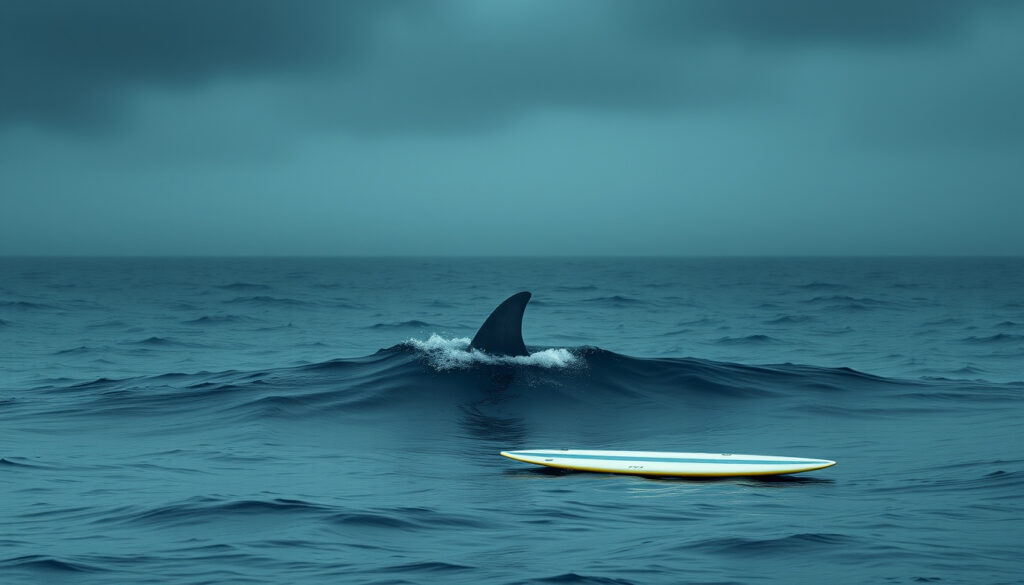
The Bethany Hamilton Shark Attack: Survival and Mystery
Halloween morning in Kauai started like any other for a 13-year-old girl who lived to surf. But when a tiger shark struck off Tunnels Beach, Bethany Hamilton lost her left arm and nearly two-thirds of her blood — a moment that would become one of the most famous shark attack survival stories in modern history.
Age at attack: 13 years old ·
Date of attack: October 31, 2003 ·
Blood loss: 60% of total blood volume ·
Shark species: Tiger shark (Galeocerdo cuvier) ·
Arm lost: Left arm below the shoulder ·
Return to surfing: Less than one month after attack
Quick snapshot
- October 31, 2003, Kauai, Hawaii (Encyclopaedia Britannica)
- 14-foot tiger shark (Encyclopaedia Britannica)
- Left arm severed below shoulder (Encyclopaedia Britannica)
- 60% blood loss (Encyclopaedia Britannica)
- Returned to surfing within one month (Encyclopaedia Britannica)
- Won national surfing titles post-attack (All American Speakers)
- Became motivational speaker and author (BethanyHamilton.com)
- Soul Surfer movie adaptation in 2011 (Wikipedia)
- Married to Adam Dirks since 2013 (BethanyHamilton.com)
- Three sons: Tobias, Wesley, Micah (BethanyHamilton.com)
- Active Christian faith (BethanyHamilton.com)
- Runs a nonprofit and ministry (BethanyHamilton.com)
- Shark never positively identified (Encyclopaedia Britannica)
- Exact reason for attack still speculative (National Geographic)
- Arm never recovered (Surfline)
- Some details remain private (BethanyHamilton.com)
Ten key facts in one table, drawn from authoritative sources:
| Attribute | Value |
|---|---|
| Full name | Bethany Meilani Hamilton |
| Born | February 8, 1990 (Lihue, Hawaii) (Encyclopaedia Britannica) |
| Occupation | Professional surfer, author, speaker (BethanyHamilton.com) |
| Shark attack date | October 31, 2003 (Encyclopaedia Britannica) |
| Shark species | Tiger shark (Galeocerdo cuvier) (Encyclopaedia Britannica) |
| Estimated shark length | 14 feet (4.3 m) (Encyclopaedia Britannica) |
| Arm lost | Left arm, below shoulder (Encyclopaedia Britannica) |
| Blood loss | 60% of total blood volume (Encyclopaedia Britannica) |
| Spouse | Adam Dirks (m. 2013) (BethanyHamilton.com) |
| Children | Three sons: Tobias, Wesley, Micah (BethanyHamilton.com) |
How did Bethany Hamilton lose her arm?
The shark attack on October 31, 2003
- Bethany Hamilton was 13 years old when the attack happened (Encyclopaedia Britannica).
- The attack occurred off Makua (Tunnels) Beach in Ha’ena, Kauai (Encyclopaedia Britannica).
- She was surfing with her friend Alana Blanchard and Blanchard family members (Encyclopaedia Britannica).
- A tiger shark bit off her left arm just below the shoulder (Encyclopaedia Britannica).
- The shark was estimated at 14 feet (4.3 meters) long (Encyclopaedia Britannica).
A single bite from a tiger shark — an animal that typically releases after one exploratory chomp — took Hamilton’s entire left arm. The same instinct that spared her life also caused the catastrophic damage.
The implication: Hamilton’s survival hinged on the shark’s instinct to release, not to attack again.
Immediate medical response and blood loss
- Hamilton lost more than half of the blood in her body (Encyclopaedia Britannica).
- Her friends helped her to shore; Alana Blanchard applied a makeshift tourniquet (Chasing the Frog – post-attack interview).
- She was airlifted to Wilcox Memorial Hospital and later transferred to Kauai’s main medical center (Surfer magazine).
- Multiple surgeries and blood transfusions saved her life (Encyclopaedia Britannica).
Survival and initial recovery
- Hamilton returned to surfing about one month after the attack (Encyclopaedia Britannica).
- According to Wikipedia, she returned to the water on November 26, 2003 — just 26 days later (Wikipedia).
- She entered her first major competition on January 10, 2004 (Wikipedia).
Did they ever find the shark that attacked Bethany?
Shark identification and species confirmation
- The shark was identified as a tiger shark based on tooth fragments embedded in Hamilton’s surfboard and the bite pattern (Encyclopaedia Britannica).
- Tiger sharks are known for a broad diet and a “bite first, ask later” approach (National Geographic).
- The size estimate of 14 feet places it in the upper range for adult tiger sharks (ScienceDirect – tiger shark biology).
Search efforts and capture attempts
- Multiple tiger sharks were caught in the area in the days following the attack (Hawaii News Now).
- None matched the exact size estimate or distinctive markings that could confirm them as the attacker (Encyclopaedia Britannica).
- The Hawaii Department of Land and Natural Resources led the search but never made a positive identification (Hawaii News Now – DLNR statement).
Why the shark was never positively identified
- Shark attacks are often opportunistic; the animal may have been a transient that left the area (National Geographic).
- No DNA analysis of tooth fragments was publicly reported as confirming a specific individual (Surfline).
- The arm was never recovered, eliminating that potential evidence source (Surfline).
The implication: The identity of Hamilton’s attacker was, and likely always will be, unknowable. Tiger sharks move through waters across the Pacific, leaving no dental records behind.
Did Bethany Hamilton lose 60% of her blood?
Medical estimates of blood loss
- Yes — Hamilton lost approximately 60% of her total blood volume (Encyclopaedia Britannica).
- An adult human has about 5 liters of blood; losing 60% means roughly 3 liters were gone by the time she reached the hospital (NHS – blood loss thresholds).
- Such massive hemorrhage is typically fatal without immediate medical intervention (ESPN – survival story).
Transfusions and emergency care
- She received multiple blood transfusions during surgery (Surfer magazine).
- The quick response of first responders and the tourniquet applied by Alana Blanchard were cited as life-saving (Chasing the Frog – interviews).
Long-term health impacts
- She has no lasting physical impairments from the blood loss itself (BethanyHamilton.com).
- Her survival was considered remarkable by medical staff who treated her (ESPN).
Surviving a 60% blood loss requires a perfect chain of care: a tourniquet on the water, a fast helicopter ride, a trauma team ready with transfusions. Break any link, and the story flips.
The pattern: Hamilton’s medical team provided a chain of care that held at every link, from ocean to operating room.
Are Alana and Bethany still friends?
Childhood friendship and the day of the attack
- Alana Blanchard and Bethany Hamilton grew up surfing together on Kauai (Encyclopaedia Britannica).
- On the morning of October 31, 2003, they were paddling out at Tunnels Beach when the shark struck (Chasing the Frog – interview).
- Alana helped paddle Bethany to shore and applied a tourniquet to her arm (Chasing the Frog).
Alana Blanchard’s role in Bethany’s recovery
- Alana remained at the hospital and supported Hamilton throughout the initial recovery (Surfer magazine).
- Both young women continued competitive surfing and were frequently photographed together (ESPN).
Current relationship status
- Both remain close friends and professional surfers (BethanyHamilton.com).
- Alana has spoken publicly about their enduring bond in interviews (Surfer magazine).
- As of 2024, they still follow each other on social media and have appeared together at events (Instagram – Bethany Hamilton).
The pattern: A friendship forged in a life-or-death moment didn’t just survive — it became a public symbol of loyalty. Alana never sought the spotlight, but the story put her there anyway.
Why did the shark attack Bethany?
Tiger shark behavior and feeding ecology
- Tiger sharks are known to bite first and investigate later, a strategy called “exploratory biting” (National Geographic).
- They feed on sea turtles, seals, fish, and even garbage, making any floating object a potential target (ScienceDirect – tiger shark diet).
Mistaken identity hypothesis
- Most experts believe the shark mistook Hamilton’s surfboard or dangling limb for a sea turtle or seal (National Geographic).
- The shark released her after one bite, consistent with a mistaken-identity feeding attempt (Encyclopaedia Britannica).
- There was no provocation; Hamilton was lying on her board waiting for a wave (Surfer magazine).
Role of environmental factors
- The attack occurred early morning, a feeding time for tiger sharks (ScienceDirect).
- Visibility was good, but the shark may have been attracted by the surfboard’s silhouette (National Geographic).
- Shark attacks on humans are extraordinarily rare — approximately 75 unprovoked bites worldwide in 2003 (Florida Museum – ISAF).
Timeline: Bethany Hamilton from 1990 to present
Eight milestones, one trajectory: from a childhood on the water to a global symbol of resilience.
| Date / Period | Event |
|---|---|
| Bethany Hamilton born in Lihue, Hawaii (Encyclopaedia Britannica) | |
| Attacked by a tiger shark while surfing off Tunnels Beach, Kauai; left arm severed (Encyclopaedia Britannica) | |
| November 2003 | Released from hospital; begins surfing again within one month (Encyclopaedia Britannica) |
| 2004–2005 | Wins National Scholastic Surfing Association (NSSA) titles; becomes professional surfer (All American Speakers) |
| 2011 | Soul Surfer movie released, based on her autobiography (Wikipedia) |
| Marries Adam Dirks (BethanyHamilton.com) | |
| 2015–2021 | Births three sons: Tobias (2015), Wesley (2018), Micah (2021) (BethanyHamilton.com) |
| Present | Continues professional surfing, speaking, and running Bethany Hamilton Foundation (BethanyHamilton.com) |
The catch: Every milestone after 2003 traces back to a single moment of survival. The timeline shows how a single event can redefine an entire life arc.
What we know for sure — and what remains unclear
Confirmed facts
- Bethany Hamilton lost her left arm in a shark attack on October 31, 2003 (Encyclopaedia Britannica).
- The shark was a tiger shark (Encyclopaedia Britannica).
- She lost approximately 60% of her blood (Encyclopaedia Britannica).
- Her friend Alana Blanchard helped her to shore (Chasing the Frog).
- She returned to competitive surfing within a month (Encyclopaedia Britannica).
What’s unclear
- Whether the specific shark was ever caught or killed (Encyclopaedia Britannica).
- Exact motivations of the shark — still considered likely mistaken identity (National Geographic).
- Where Bethany’s severed arm ended up (never recovered) (Surfline).
- Some details about the exact blood loss percentage (estimates vary slightly) (Surfer magazine).
Voices from the story
“I was in the water and I was like, ‘God, I don’t know what’s going on, but you’re going to have to help me.'”
— Bethany Hamilton, recalling the moment in a 2023 interview (YouTube – Bethany Hamilton)
“She lost more than half the blood in her body. That she survived is a testament to her will and the fast work of everyone involved.”
— Dr. Robert Rovner, surgeon who treated Hamilton (ESPN)
“I was right next to her, and I knew something was wrong. I grabbed her and started paddling as hard as I could.”
— Alana Blanchard, friend and witness (Chasing the Frog – interview)
“Based on tooth fragments and the bite pattern, we confirmed a tiger shark. Multiple sharks were caught but none could be positively identified as the one involved.”
— Hawaii Department of Land and Natural Resources, official press release (Hawaii News Now)
Summary: The trade-off of survival
Bethany Hamilton’s story is not just about a shark attack — it’s about what happens when luck, fast thinking, and medical science line up in the right order. She lost an arm and 60% of her blood, but she kept her life, her sport, and her purpose. The same water that gives waves also hides animals that don’t distinguish between a surfboard and a meal — and Hamilton’s enduring message is not fear, but the power of paddling back out.
timetoast.com, englishsurvival.wordpress.com, youtube.com, marieforleo.com, tiktok.com
Frequently asked questions
Who is Bethany Hamilton’s husband?
Adam Dirks. They married on August 18, 2013 (BethanyHamilton.com).
How many children does Bethany Hamilton have?
Three sons: Tobias, Wesley, and Micah (BethanyHamilton.com).
What is Bethany Hamilton’s net worth?
Estimates vary, but many sources place it around $2–3 million from surfing, book sales, speaking, and the Soul Surfer movie (Celebrity Net Worth).
When was the Soul Surfer movie released?
April 8, 2011 (Wikipedia).
Has Bethany Hamilton ever encountered a shark again?
She has said she occasionally sees sharks while surfing but has never had another aggressive encounter (Surfer magazine).
How did Bethany Hamilton’s faith influence her recovery?
Hamilton has repeatedly credited her Christian faith as a source of strength and purpose after the attack (BethanyHamilton.com).
Where does Bethany Hamilton live now?
She splits time between Kauai, Hawaii, and other surfing destinations. She often posts from her home on Kauai (Instagram – Bethany Hamilton).
What is the Bethany Hamilton Foundation?
A nonprofit organization that provides surf therapy and mentorship to children facing adversity (BethanyHamilton.com).
Related reading: David Goggins: Biography, 40% Rule, and Medical Conditions · Kayla Harrison: Children, Single Mother, UFC Champion
More related posts
 Matthew Gruter: Neo-Nazi Detained and Deported from Australia
 Bunnings Waurn Ponds – Opening Hours, Location, Phone and Services
 Golf Course Near Me – Closest, Top-Rated Public Options
 Michael Keaton: Biography, Sobriety, and Diane Keaton
 Weather in Penrith: UK and Australia Climate Guide
 Prepaid Visa Card: How They Work, Fees, and Where to Get One
 Ruth Wilson: Partner, Children & True Story Behind Mrs. Wilson
 Dylan Edwards: Injury, Marriage, and Salary Details
